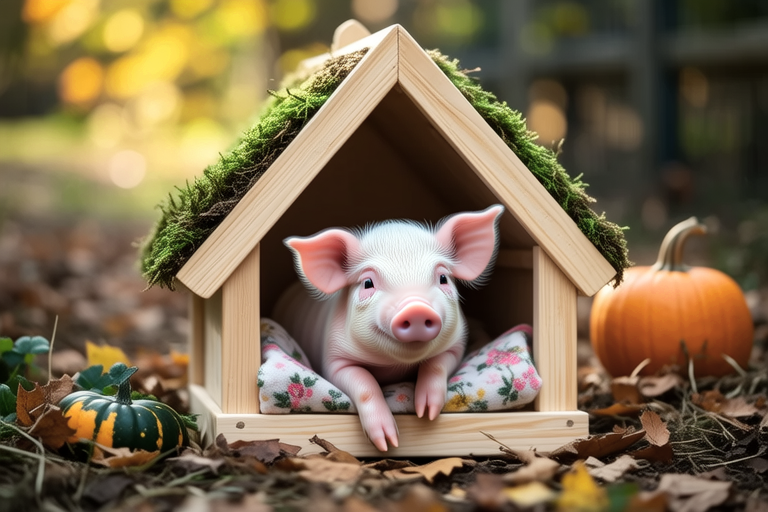
Pigskin Palaces: Designing Cozy Homes for Mini Pigs
Welcome to the world of mini pigs! These adorable, intelligent creatures require more than just a cozy corner; they need a well-thought-out living space that caters to their unique behaviors and needs. In this guide, we’ll explore how to design a perfect home for your mini pig, ensuring they’re comfortable, stimulated, and safe.
Essential Space Requirements
Mini pigs, despite their name, can grow quite large, so it’s crucial to provide ample space for them. The minimum recommended area for one adult mini pig is about 40 square feet, but larger spaces are even better. This space should be divided into several areas: sleeping, eating, playing, and toileting. Each area should have distinct purposes to encourage natural behaviors.
For example, the sleeping area should be quiet and away from high traffic areas. The eating area should be easily accessible and separate from the sleeping area to prevent contamination. The play area should be spacious enough for your mini pig to run around and stretch its legs. Lastly, the toileting area should be designated and cleaned regularly.
Ideal Bedding Materials
The right bedding material is key to your mini pig’s comfort and health. Avoid using straw or hay as bedding because they can cause respiratory issues due to dust and mold. Instead, opt for soft, hypoallergenic materials like fleece blankets, memory foam pads, or sheepskin rugs. These materials provide cushioning and warmth while being easy to clean.
Ensure the bedding is changed regularly to maintain hygiene and prevent odors. You might also consider providing a variety of textures for your mini pig to choose from, as different pigs may have different preferences. Rotate these options to keep things interesting and stimulate your pet’s senses.
Temperature Control
Mini pigs are sensitive to extreme temperatures, so maintaining a comfortable environment is vital. Ideally, the temperature in their living space should range between 68°F and 75°F (20°C to 24°C). During colder months, you can add extra layers of bedding or use heating pads designed for pets to keep them warm. In warmer months, ensure there’s plenty of shade and ventilation, and consider using fans or air conditioning if necessary.
Adequate ventilation is crucial to prevent stuffiness and humidity, which can lead to respiratory problems. Install windows with screens or use exhaust fans to promote air circulation. Always monitor the temperature and adjust accordingly to ensure your mini pig remains comfortable throughout the year.
Enrichment Toys
Toys are essential for stimulating your mini pig’s mind and keeping them active. Choose toys that encourage problem-solving and exploration. Puzzle feeders, for instance, can provide mental stimulation while also satisfying their natural foraging instincts. Balls, ropes, and chew toys can help them exercise and relieve boredom.
Incorporate items that mimic natural environments, such as branches, tunnels, or hideaways. These additions can make your mini pig’s home feel more like a sanctuary, reducing stress and promoting overall well-being. Rotate toys periodically to maintain interest and prevent monotony.
Safety Considerations
Your mini pig’s safety should always be a top priority. Ensure all furniture and decorations are secure and stable to prevent tipping or collapsing. Use non-toxic, pet-safe materials when constructing or purchasing items for your pig’s living space. Avoid sharp edges, small parts, or toxic substances that could pose a choking hazard or poisoning risk.
Install childproof locks on cabinets and doors to prevent access to hazardous areas. Keep electrical cords out of reach and secure any loose wires to avoid accidental electrocution. Regularly inspect the living space for potential dangers and address them promptly to ensure a safe environment for your mini pig.
Personalized Environment
Each mini pig has its own personality and preferences, so it’s important to create a personalized environment that caters to their unique behaviors and needs. Observe your mini pig’s habits and adapt the living space accordingly. Some pigs prefer more privacy, while others enjoy social interaction. Provide hiding spots or enclosed areas for those who need solitude and ensure there are open spaces for social pigs to interact.
Consider incorporating elements that reflect your mini pig’s individuality, such as favorite toys or personal items. By tailoring the environment to suit your pig’s specific traits, you can foster a sense of security and contentment, leading to a happier and healthier pet.
Selecting Appropriate Furniture and Accessories
When choosing furniture and accessories for your mini pig’s home, focus on comfort, durability, and functionality. Opt for sturdy, easy-to-clean materials that can withstand wear and tear. Look for pieces that offer multiple functions, such as beds that double as lounging areas or storage containers that serve as feeding stations.
Consider adding shelves or platforms for elevated resting spots, as many mini pigs enjoy looking down from higher vantage points. Incorporate cozy blankets, cushions, and hammocks to enhance comfort and create inviting spaces. Select accessories that match your decor while remaining functional and safe for your mini pig.
Tips for First-Time Owners
If you’re new to mini pig ownership, start by researching extensively and consulting with experienced owners or veterinarians. Begin with basic necessities and gradually introduce more advanced features as you gain confidence. Be patient and observant, adjusting the living space based on your mini pig’s reactions and preferences.
Remember that creating a comfortable and stimulating environment takes time and effort. Stay committed to providing the best possible home for your mini pig, and they will reward you with companionship and joy.
Tips for Experienced Owners
Even experienced owners can benefit from revisiting the basics and exploring new ideas. Regularly evaluate your mini pig’s living space, making improvements and adjustments as needed. Experiment with different layouts, materials, and accessories to discover what works best for your pig. Share your knowledge and experiences with other owners to foster a supportive community and continue learning together.
Stay informed about advancements in mini pig care and incorporate innovative solutions into your pet’s living space. By continuously refining and enhancing the environment, you can ensure your mini pig enjoys a fulfilling and enriching life.
In conclusion, designing a cozy home for your mini pig involves careful planning, thoughtful selection of materials, and ongoing attention to their needs. By prioritizing space, comfort, safety, and enrichment, you can create a haven that promotes your mini pig’s physical and mental well-being. Remember, a happy pig is a healthy pig, and a well-designed living space plays a significant role in achieving that goal.
