Meet The Acrobatic Masters: Everything You Need To Know About Squirrels
Welcome to the fascinating world of squirrels! These small, agile creatures are a common sight in both urban and rural landscapes, captivating people with their acrobatic skills and playful antics. From their diverse species to their unique behaviors, there’s much to learn about these charismatic rodents. This article will delve into various aspects of squirrel life, providing you with all the information you need to appreciate and understand these acrobatic masters.
Squirrel Species Diversity
With over 200 species worldwide, squirrels are incredibly diverse. They belong to the family Sciuridae and can be found in various habitats across North America, Europe, Asia, and Africa. The most commonly recognized species include the Eastern Gray Squirrel (Sciurus carolinensis), the Western Gray Squirrel (Sciurus griseus), and the American Red Squirrel (Tamiasciurus hudsonicus). Each species has its distinct characteristics, such as fur color, size, and habitat preference. For instance, the Eastern Gray Squirrel is known for its grayish-brown fur and large population in North America, while the American Red Squirrel boasts reddish-brown fur and is often found in forests.
Acrobatic Abilities
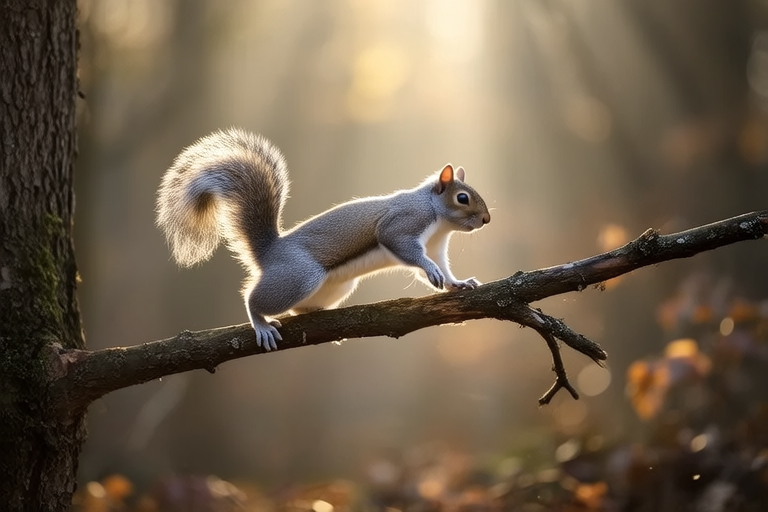
One of the most striking features of squirrels is their exceptional agility. Their strong limbs, sharp claws, and bushy tails make them adept climbers and jumpers. Squirrels can leap distances up to ten times their body length, allowing them to navigate trees with ease. They also have a remarkable ability to balance on narrow branches and hang upside down from tree limbs. Their bushy tails serve multiple purposes, including balance, communication, and warmth. These acrobatic skills are crucial for finding food, avoiding predators, and navigating their environment.
Diet and Foraging Habits
Squirrels are omnivores, but their diet primarily consists of nuts, seeds, fruits, and fungi. They have a particular affinity for acorns, which they collect and store for winter. Squirrels are meticulous hoarders, burying caches of food throughout their territory. Interestingly, they often forget the location of some of these caches, inadvertently aiding in forest regeneration. In addition to foraging on the ground, squirrels climb trees to access fruit and nuts. They are opportunistic feeders and may consume insects, bird eggs, or even small vertebrates if the opportunity arises.
Habitat Preferences
Squirrels are adaptable animals that thrive in various environments, from dense forests to urban parks. Different species prefer different habitats. For example, the Eastern Gray Squirrel is commonly found in deciduous forests, while the American Red Squirrel prefers coniferous forests. Urban squirrels have successfully adapted to city life, taking advantage of human-provided resources like bird feeders and gardens. Despite their adaptability, squirrels still require sufficient cover and food sources to thrive. Providing them with suitable habitats, such as birdhouses or nesting boxes, can help support local populations.
Communication Methods
Like many animals, squirrels rely on vocalizations and body language to communicate. They produce a range of sounds, from chirps and barks to alarm calls. Alarm calls are particularly important for warning other squirrels of potential threats. Squirrels also use tail flicks and postures to convey messages. For instance, a raised tail may indicate alertness or aggression, while a flicking tail could signal curiosity or excitement. Understanding these communication methods can help humans better interpret squirrel behavior and respond appropriately.
Reproduction Cycles
The reproductive cycle of squirrels varies by species but generally occurs once or twice annually. Female squirrels typically give birth to litters of two to eight pups after a gestation period of around four to six weeks. Newborn squirrels are blind and hairless, relying entirely on their mother for care during the first few weeks of life. As they grow, they develop their senses and begin exploring their surroundings. By the time they reach adulthood, squirrels are fully capable of surviving on their own.
Common Behaviors
Besides their acrobatic feats and foraging habits, squirrels exhibit a range of interesting behaviors. They are territorial animals that mark their territories with scent glands and defend them against intruders. Squirrels are also known for their playfulness, especially when young. They engage in playful chases and mock fights, honing their survival skills in the process. Additionally, squirrels are diurnal animals, meaning they are most active during the day. However, some species, like the flying squirrel, are nocturnal and more active at night.
Interactions With Humans
Humans and squirrels have a long history of interaction, with squirrels often thriving in urban environments due to the availability of food and shelter. While squirrels can be beneficial for dispersing seeds and controlling insect populations, they can also cause damage to gardens, bird feeders, and buildings. To coexist harmoniously with squirrels, it’s essential to take precautions such as securing trash cans, using squirrel-proof bird feeders, and planting squirrel-resistant plants. Additionally, providing alternative food sources, like squirrel feeders, can help divert their attention away from your garden or property.
Dispelling Myths
Despite their popularity, squirrels are often misunderstood. One common myth is that squirrels are pests that should be eradicated. In reality, squirrels play a vital role in maintaining ecosystems by dispersing seeds and controlling insect populations. Another myth is that squirrels hibernate during winter. While some species, like the ground squirrel, do hibernate, tree squirrels remain active year-round, relying on stored food and adapting their behavior to colder temperatures. Understanding these truths can foster greater appreciation for squirrels and promote coexistence.
Tips for Coexisting Harmoniously
To ensure peaceful coexistence with squirrels, consider the following tips:
- Secure trash cans and compost bins to prevent squirrels from accessing food waste.
- Use squirrel-proof bird feeders to protect seed supplies.
- Plant squirrel-resistant plants to discourage them from feasting on your garden.
- Provide alternative food sources, such as squirrel feeders, to divert their attention away from your property.
- Install barriers, like mesh or fencing, to prevent squirrels from entering attics or chimneys.
By implementing these strategies, you can enjoy the presence of squirrels without experiencing significant disruptions.
In conclusion, squirrels are fascinating creatures with diverse species, remarkable acrobatic abilities, and unique behaviors. Understanding their needs and habits can help us coexist peacefully, fostering a harmonious relationship between humans and these delightful animals. Whether you’re watching them dart through trees or enjoying their antics in your backyard, squirrels offer endless opportunities for fascination and wonder.
