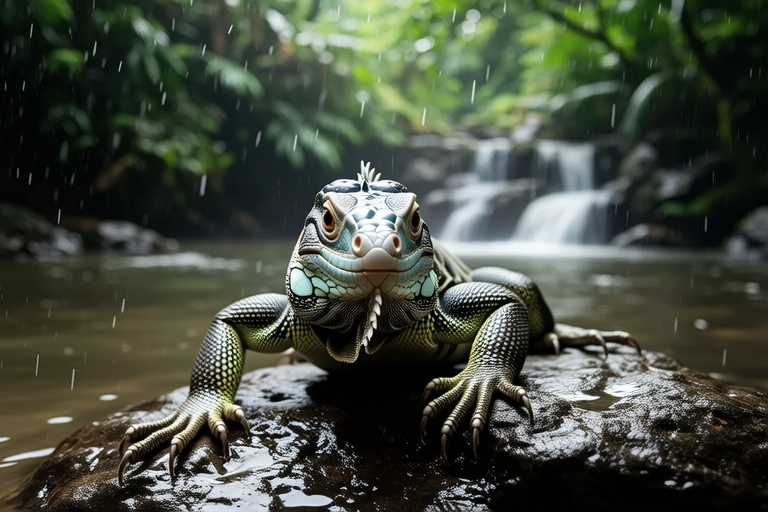
The Fascinating World of Water Monitors: Myths and Facts You Need to Know
Water monitors (Varanus salvator) are among the largest lizards in the world, known for their impressive size and remarkable adaptability. These reptiles can be found across Southeast Asia, from India to Indonesia, thriving in diverse habitats such as mangrove swamps, rivers, and forests. With their sleek bodies and powerful tails, water monitors are adept swimmers, capable of diving to depths of up to 45 meters and staying submerged for over an hour. Their sharp eyesight and keen sense of smell make them efficient hunters, preying on a wide variety of animals.
Habitat and Basic Characteristics
Water monitors are typically found in tropical regions where water sources are abundant. They inhabit areas like freshwater streams, coastal wetlands, and even urban environments near human settlements. Their habitat preferences vary depending on the specific subspecies and local conditions. For instance, the Borneo water monitor (Varanus salvator cumingi) is more terrestrial, while the larger Malaysian water monitor (Varanus salvator macromaculatus) is highly aquatic.
These lizards are characterized by their long necks, strong limbs, and muscular tails. Adults can reach lengths of up to three meters, with males generally being larger than females. Their skin is covered in small scales that provide protection against predators and abrasions. The coloration of water monitors can range from dark brown to olive green, often with yellowish spots or stripes that help them blend into their surroundings.
Common Myths About Water Monitors
Myth 1: Water Monitors Are Dangerous to Humans
One of the most pervasive myths about water monitors is that they pose a significant threat to humans. While it’s true that water monitors can be aggressive when provoked, they rarely attack unprovoked. In fact, many attacks occur when people attempt to handle or feed these lizards. Water monitors are primarily interested in securing their own safety and finding food. They are not naturally inclined to view humans as prey.
Myth 2: Water Monitors Can Poison Prey
Another misconception is that water monitors have venomous saliva. There is no scientific evidence to support this claim. While their mouths do contain bacteria from their diet, which can cause infections if bites occur, there is no venomous substance present. The idea of venom may stem from the lizard’s ability to deliver painful bites and their robust appearance.
Myth 3: Water Monitors Are Endangered
Contrary to popular belief, water monitors are not considered endangered species. However, certain subspecies and populations face threats due to habitat destruction and illegal hunting. The International Union for Conservation of Nature (IUCN) lists the species as Least Concern, but localized declines are observed in areas with heavy human activity.
Diet and Behavior
Water monitors are opportunistic omnivores, meaning they eat both plant matter and animal protein. Their diet includes insects, fish, amphibians, birds, eggs, and small mammals. They also consume fruits and seeds, particularly during times when other food sources are scarce. This dietary flexibility allows them to survive in various ecological niches.
In terms of behavior, water monitors are diurnal, meaning they are active during the day. They spend much of their time basking in the sun to regulate body temperature. When not hunting, they can be found lounging on branches or rocks near water bodies. Water monitors are also known for their intelligence and problem-solving abilities, which aid them in capturing prey and avoiding danger.
Unique Adaptations
One of the most notable adaptations of water monitors is their ability to swim efficiently. Their streamlined bodies and powerful tails allow them to move swiftly through water. Additionally, their nostrils are positioned high on their snouts, enabling them to breathe easily while partially submerged. This adaptation is crucial for their survival in aquatic environments.
Water monitors also possess excellent climbing skills, thanks to their sharp claws and strong muscles. They can scale trees, rocks, and even man-made structures with ease. This versatility helps them escape predators and access elevated areas for basking or resting.
Challenges in the Wild and Conservation Efforts
Despite their resilience, water monitors face several challenges in the wild. Habitat destruction, particularly deforestation and wetland drainage, has reduced their available living space. Furthermore, illegal hunting for meat, skin, and the exotic pet trade poses a significant threat to their populations. Some individuals are captured alive and sold as pets, while others are killed for their meat, which is considered a delicacy in some cultures.
To address these issues, various conservation initiatives are underway. Organizations and governments are working together to protect critical habitats and enforce stricter regulations on hunting and trade. Educational programs aim to raise awareness about the importance of preserving water monitor populations and their ecosystems. Additionally, research projects focus on understanding the species’ biology and behavior to develop effective conservation strategies.
Advice for Interaction and Observation
If you’re interested in observing water monitors in their natural environment, it’s essential to approach them with caution and respect. Avoid disturbing their habitats or feeding them, as this can disrupt their normal behaviors and lead to habituation. Always maintain a safe distance and use binoculars or a camera with a zoom lens to get a closer look without causing stress to the animals.
For those considering keeping a water monitor as a pet, it’s important to note that these lizards require specialized care and housing. They need large enclosures with ample space for swimming and climbing, as well as a varied diet that mimics their natural food sources. Prospective owners should thoroughly research the responsibilities involved and ensure they can provide proper care before making a commitment.
Ultimately, water monitors are fascinating creatures that deserve our admiration and protection. By learning more about their habits, habitats, and challenges, we can contribute to their conservation and ensure these remarkable lizards continue to thrive in the wild.
