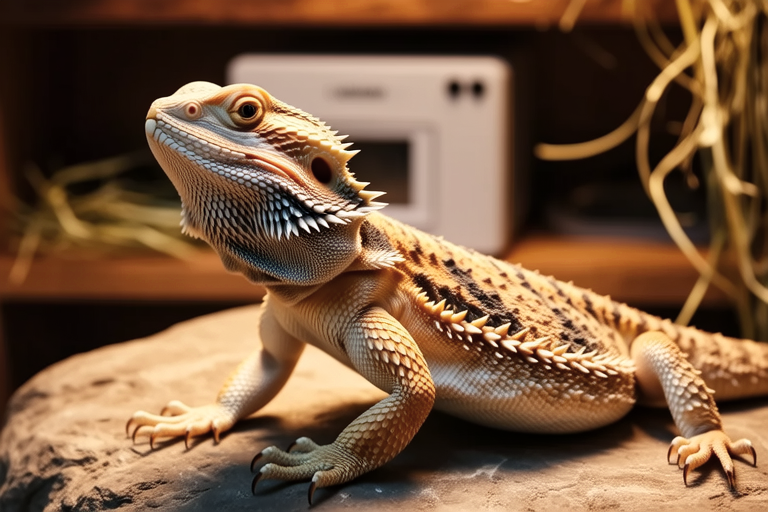
Welcome to Bearded Dragon Ownership!
Bringing home a bearded dragon can be an exciting adventure. These reptiles are popular pets due to their docile nature and engaging personalities. However, they require specific care to thrive. This guide will cover everything from setting up their habitat to recognizing signs of good health.
Housing Setup: Creating a Comfortable Environment
Enclosure Size
Your bearded dragon needs enough space to move around comfortably. For juveniles, a 20-gallon tank is sufficient, but adults require at least a 40-gallon tank. Ensure there’s ample room for climbing structures like branches or rocks.
Lighting
Proper lighting is crucial for your dragon’s well-being. UVB bulbs promote calcium absorption necessary for bone health. Place the bulb about 12 inches above the substrate and replace it every six months. Full-spectrum lighting simulates natural sunlight, helping them regulate their circadian rhythms.
Heating
Maintain a temperature gradient within the enclosure with a basking spot reaching 95-110°F (35-43°C) and cooler areas between 75-85°F (24-29°C). Use under-tank heaters or ceramic heat emitters to achieve this, ensuring safety by monitoring temperatures regularly.
Diet: Feeding Your Bearded Dragon
Types of Food
A balanced diet includes insects such as crickets, dubia roaches, and waxworms. Vegetables like collard greens, mustard greens, and squash should also be offered. Avoid iceberg lettuce and spinach as they lack nutritional value.
Feeding Schedules
Feed juveniles daily with a mix of insects and vegetables. Adults can eat every other day. Gut-load feeder insects with nutritious foods before offering them to your dragon. Dust insects with calcium powder twice weekly and multivitamins once a week.
Hydration: Keeping Your Dragon Healthy
Provide fresh water daily in a shallow dish. Mist your dragon occasionally to encourage drinking. Some dragons may enjoy taking baths; ensure water is shallow and clean.
Handling Techniques: Building Trust
Handle your dragon gently, supporting its body fully. Start sessions gradually, allowing them to become comfortable with your touch. Always wash hands before and after handling to prevent the spread of bacteria.
Health Care: Monitoring Your Dragon’s Wellbeing
Signs of Illness
Watch for unusual behaviors such as lethargy, loss of appetite, or difficulty moving. Discharge from eyes, nose, or mouth, as well as swelling, could indicate infection. Regularly check skin condition for any abnormalities.
Vet Visits
Visit a veterinarian experienced with reptiles annually. They can perform routine examinations and recommend appropriate vaccinations. Early detection of potential issues ensures better outcomes.
Common Myths: Separating Fact from Fiction
- Myth: Bearded dragons hibernate.
Fact: While some species might brumate, most captive bearded dragons do not need to undergo this process. - Myth: They can live solely on insects.
Fact: A varied diet that includes vegetables is essential for optimal health. - Myth: Handling frequently stresses dragons.
Fact: With proper handling techniques, interaction can strengthen bonds without causing stress.
Practical Tips for Success
- Use a digital thermometer and hygrometer to monitor environmental conditions accurately.
- Keep enclosures away from direct sunlight to prevent overheating.
- Rotate toys and decorations periodically to stimulate curiosity.
- Consider joining local reptile clubs or online forums for additional support and advice.
Raising a bearded dragon requires dedication but brings immense rewards. By following these guidelines, you’ll create a nurturing environment where your pet thrives. Remember, each dragon has unique preferences; observe yours closely to tailor care accordingly.
