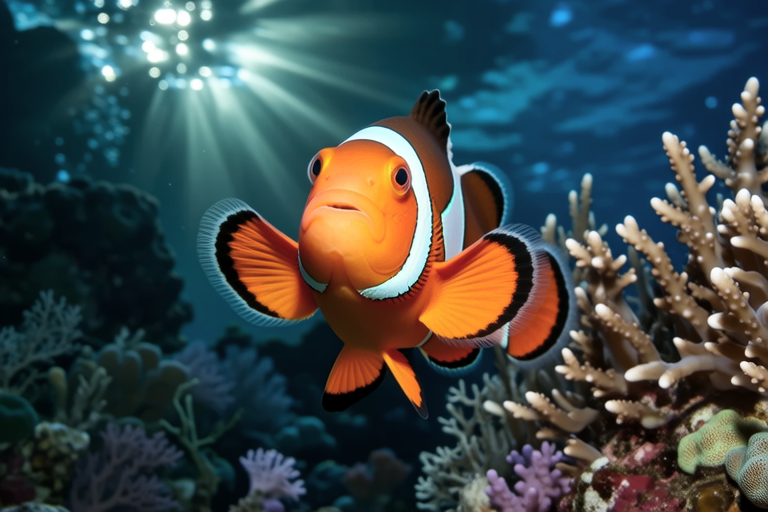
Clownfish: From Movie Stars to Marine Guardians
The clownfish, often recognized from its starring role in Disney’s Finding Nemo, has captured the hearts of millions. However, beyond the animated portrayal, these fish possess remarkable traits that make them indispensable to marine ecosystems. This article delves into the transition of clownfish from being predominantly known through popular media to being understood in their true context within real-life marine environments. It explores their unique adaptations, social behaviors, the challenges they face in the wild, and their crucial role in maintaining coral reef ecosystems. Additionally, it provides tips for aquarium owners interested in keeping clownfish, emphasizing their care requirements and environmental needs.
Unique Adaptations and Social Behaviors
Clownfish are renowned for their striking appearance, with bright orange bodies and white stripes. Their vibrant colors serve as a warning to potential predators, signaling their toxicity. Indeed, clownfish are immune to the stinging cells of sea anemones, which they call home. This symbiotic relationship is mutually beneficial: the clownfish protect the anemone from herbivorous fish, while the anemone provides shelter and food scraps for the clownfish.
Socially, clownfish live in groups, typically consisting of a dominant female and one or more males. The dominant female is responsible for laying eggs, which she carefully guards until they hatch. Interestingly, if the dominant female dies, the largest male in the group can transform into a female, ensuring the continuation of the species. This ability to change sex is a unique adaptation that enhances the survival of clownfish populations.
Differences Between Portrayal in Movies and Actual Characteristics
In Finding Nemo, the clownfish are depicted as playful and adventurous, with Nemo embarking on a daring journey to find his father. While this portrayal captures the spirit of clownfish, it simplifies their complex lives in the wild. In reality, clownfish are cautious and risk-averse, staying close to their anemone homes to avoid predators. Their interactions with other fish are limited, and they rarely venture far from their protective environment.
Moreover, the movie suggests that clownfish can communicate effectively with other species, such as sharks and humans. In truth, clownfish rely on chemical signals and body movements to communicate within their own species. They do not engage in extensive communication with other marine creatures, nor do they possess the ability to understand human speech.
Challenges Clownfish Face in the Wild
Despite their adaptations and protective measures, clownfish face numerous challenges in the wild. One of the most significant threats is habitat destruction, particularly the degradation of coral reefs due to climate change, pollution, and overfishing. As coral reefs decline, so does the availability of suitable anemone hosts for clownfish. This loss of habitat directly impacts their ability to reproduce and survive.
Another challenge is the illegal trade of clownfish for the aquarium industry. Overharvesting can lead to population declines, especially in areas where fishing regulations are lax. To address this issue, some countries have implemented restrictions on the collection of clownfish, promoting captive breeding programs instead.
The Role of Clownfish in Maintaining Coral Reef Ecosystems
Clownfish play a vital role in maintaining coral reef ecosystems. By protecting their anemone hosts from herbivorous fish, they help maintain the balance of the reef community. Anemones, in turn, provide essential services to the reef, including nutrient cycling and oxygen production. Without clownfish, the delicate balance of the reef ecosystem could be disrupted, leading to further degradation.
Additionally, clownfish contribute to the biodiversity of coral reefs by serving as prey for larger predators. Their presence attracts a variety of fish species, enhancing the overall health and resilience of the reef. Therefore, the conservation of clownfish is crucial for the preservation of coral reef ecosystems.
Tips for Aquarium Owners Interested in Keeping Clownfish
For those interested in keeping clownfish in home aquariums, there are several care requirements and environmental needs to consider. First, it is essential to provide a suitable tank size, ideally no smaller than 30 gallons, to accommodate the fish’s natural swimming patterns. The tank should also include a healthy anemone or alternative hiding spots, such as live rock or artificial structures, to mimic their natural habitat.
Water quality is critical for the health of clownfish. Maintain stable water parameters, including temperature (76-82°F), pH (8.1-8.4), and salinity (1.020-1.025). Regular water changes and proper filtration are necessary to ensure a clean and healthy environment. Feeding clownfish a balanced diet of high-quality flake or pellet food, supplemented with occasional treats like frozen brine shrimp or mysis虾, will promote optimal growth and longevity.
It is important to note that clownfish can become territorial in captivity, especially when space is limited. Introducing multiple clownfish to the same tank requires careful planning and gradual acclimation. Providing ample hiding spots and ensuring sufficient territory for each fish can help reduce aggression and promote peaceful coexistence.
Conclusion
While clownfish have gained widespread recognition through popular media, it is essential to appreciate them not just as movie stars but as integral parts of marine biodiversity. Their unique adaptations, social behaviors, and vital role in maintaining coral reef ecosystems make them fascinating subjects for study and admiration. By understanding the challenges they face in the wild and providing appropriate care in captivity, we can contribute to their conservation and the preservation of marine ecosystems.
Encourage readers to learn more about clownfish and their importance in marine environments. Support conservation efforts and responsible aquaculture practices to ensure the continued existence of these remarkable fish. Together, we can help protect clownfish and the intricate web of life they support in our oceans.
